Against the current: Saving the Atlantic Salmon
Celebrating the projects that are providing hope for the Atlantic salmon. Tagged adults are returning, juveniles are spawning in new places and rivers once declared dead are now breeding grounds for salmon, proving that recovery is possible for the ‘King of Fish’.
11/11/26
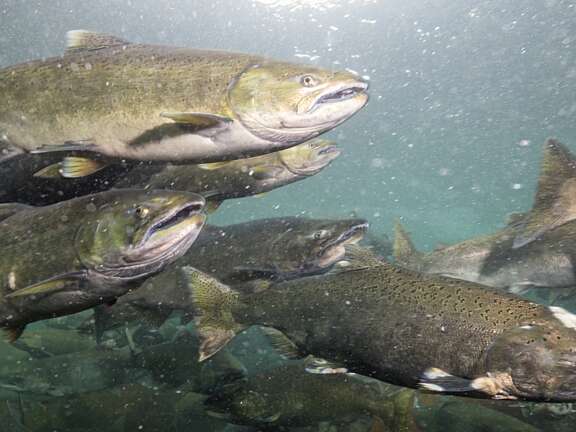
The Atlantic salmon is one of the most remarkable species found in British and Irish rivers. Celebrated for its epic migrations, prized by anglers and central to the health of our freshwater ecosystems, the salmon has long been known as the "King of Fish”. The cultural significance of the salmon is so great, that it made the shortlist of species to feature on our new redesigned bank notes (unfortunately losing out to the puffin, barn owl, hedgehog and buff-tailed bumblebee).
However, despite its acclaim, this iconic species is in trouble. The numbers of Atlantic salmon have been plummeting in recent decades. Artificial barriers that block migration routes, pollution and climate change are making it increasingly difficult for salmon to survive and complete their extraordinary life cycle.
Atlantic salmon are what’s known as a keystone species, an animal that can have a disproportionate impact on the ecosystem. With young salmon born into fresh water, they provide a vital food source for many river species, while adults carry nutrients thousands of miles from the ocean back into freshwater habitats, supporting life throughout the catchment. Therefore, when salmon decline, the health of the entire river ecosystem can suffer.
But there is hope. Across Britain and Ireland, thanks to the hard work of The Rivers Trust Movement and partners, restoring habitats, removing barriers and improving water quality, in some areas salmon are making a comeback.
Here are some inspiring examples of salmon conservation in action.
Tagged salmon return to Scottish rivers
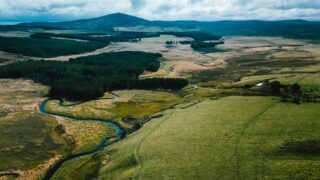
Project Deveron, a partnership between Deveron, Isla and Bogie Rivers Trust and the Atlantic Salmon Trust, is seeing some positive results after carrying out river restoration in Scotland. Thanks to the removal of artificial barriers and the planting of buffer strips, which can slow the flow of water and reduce soil and pollution run-off from land, salmon are beginning to return. With ARIS sonar imaging which can accurately count returning fish, and a tagging programme that began in 2021, tagged adult Atlantic salmon have been seen returning to the River Deveron.
The Hodder is home for breeding salmon for the first time in a decade
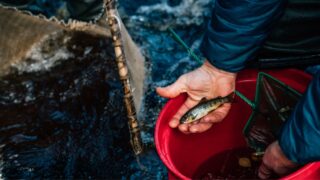
Within the catchment of the River Hodder in Lancashire, during a short five-minute survey this year, 108 young salmon were recorded. This is the highest density of salmon fry (very young salmon about one or two inches long) that the team has ever recorded! Ribble Rivers Trust also found two salmon parr (slightly older salmon, three to nine inches long) on a tributary of the River Calder, the first time that the fish have been recorded at that site in over a decade.
Encouraging signs for salmon in the Wye, Usk and their tributaries
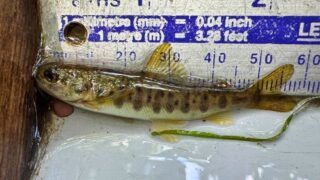
2025 surveys by the Wye and Usk Foundation (WUF) have revealed some promising trends for Atlantic salmon across their catchments. The River Usk recorded its highest average salmon parr catch for nine years, while the Wye also had another positive year for salmon. There are spawning strongholds across the Wye, including Irfon and Ithon which were excellent for fry and parr, and numbers continue to increase in the Marteg and Bidno.
The findings by WUF suggest that turbidity, water clarity, plays a crucial role in salmon spawning success. Working to create healthy soils that can absorb and store more water leads to the river conditions that salmon need to thrive, and where even a low number of adult fish can still produce strong populations of juvenile salmon.
Salmon found on river previously declared ecologically dead
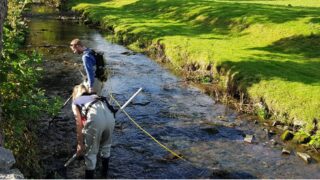
Last year, Don Catchment Rivers Trust found a salmon smolt, an older fish in the next stage of its life cycle that has undergone physiological changes to prepare for adult life out at sea, on the river Don. This news is particularly positive as at the start of the 20th century, the river was declared ecologically dead. Now, after a quarter of a century of river restoration and installing fish passes, it seems that the work is finally paying off. There was more positive news this year when a parr was discovered, indicating that the fish was born in the Don and that Atlantic salmon were once again successfully breeding in the river!
Previously unrecorded juvenile Atlantic Salmon in Derbyshire
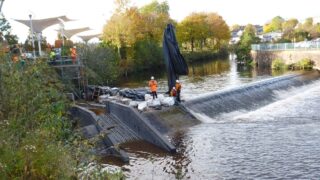
This year (2026), Trent Rivers Trust recorded a juvenile Atlantic salmon in a brook in Derbyshire that has never previously had salmon recorded in. This is a very positive sign that the species is more widespread in the River Derwent and its tributaries than previously thought, and that efforts to open sections of the heavily modified rivers Trent, Derwent and Ecclesbourne are already allowing salmon to once again access historic spawning grounds.
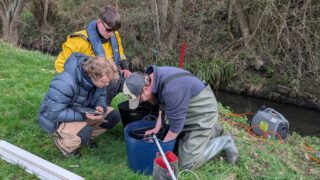
If you would like to learn more about the Atlantic salmon, the threats they are facing and the work The Rivers Trust Movement is doing to protect them, you can read our deep dive on Atlantic salmon from our 2026 State of Our Rivers Report.
The Rivers Trust are a proud member of the Missing Salmon Alliance, a collaboration between the Atlantic Salmon Trust, The Game & Wildlife Conservation Trust, The Angling Trust, Fisheries Management Scotland, FishLegal, Afonydd Cymru, and The Rivers Trust, with the aim of halting and reversing the decline in Atlantic Salmon. By combining expertise, coordinating activities, and advocating effective management solutions, MSA seeks to not only restore rivers and improve salmon habitats, but influence policy and decision-making at the highest level to protect wild salmon.