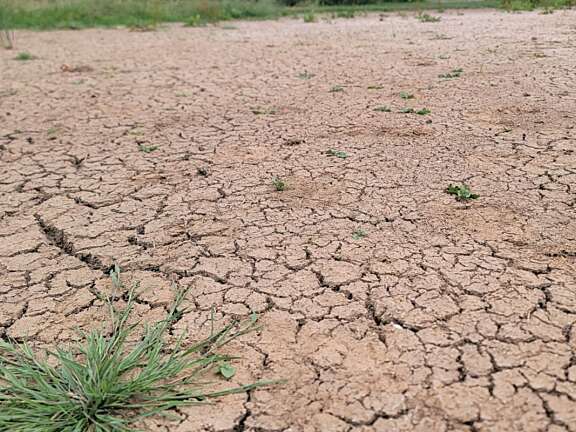
Why saving water right now is more important than ever: how drought and water scarcity affect the whole river
Record-breaking heat and prolonged dry weather have left much of England in drought, with water scarcity affecting areas across the UK and Ireland. But what does this mean for our rivers and wildlife, and how can we create healthier, more resilient rivers and landscapes in the face of a changing climate?
30/07/26
Heatwaves, hosepipe bans, and the word ‘drought’ are increasingly making headlines in the UK, but news stories don’t often connect the dots between the weather, our domestic and business water usage, and the survival of our native biodiversity as our climate changes. Rarely do they follow the water (or lack of) it back to our rivers and explore why heatwaves are a major concern for our waterways and wildlife, and why it’s essential that we all (including industry, agriculture and households) use and store water responsibly – all year round.
How and why rivers in the UK are getting low
As we experience another heatwave causing us to dash out to buy an air conditioning unit and head to social media for creative ways to keep cool, it is becoming more and more clear that weather that we used to think of as extreme, is becoming the new normal.
The Met Office’s recent State of the UK Climate report 2025 [1] puts the last decade into historical context to show us the changes we’re already seeing in our climate. And three things are immediately clear:
- The UK is warming
- Temperature extremes are increasing in frequency and intensity
- Our rivers are feeling the heat, and are subsequently running low
Not only was 2025 the UK’s warmest year on record, but this marks the sixth time this record has been broken in the 21st century, so far, with the last four years all being in the top five warmest years on record. We’re becoming increasingly accustomed to summer temperatures reaching 35°C, when, aside from historical heatwaves like 1976, such conditions would have been considered unusual. Yet, records are now being broken with concerning frequency. This year, Norfolk recorded a new June high of 37.7°C, beating the previous 35.6°C set in 1976. This summer has also already seen six days exceed 35°C, a new record, and is the first year where these temperatures have been experienced in three separate months, May, June, and July.
Alongside the hot weather, has come a prolonged lack of rainfall. In 2025, England experienced one of the driest springs in over a century and the driest January to June period in nearly 50 years. This year is showing a similar trend; as of July, England has only received 7% of its long-term average July rainfall [2], with the south and east of the country experiencing none at all in the longest rain-free spell since the 1990s. And, as of the 29th of July, half of England has been declared in drought by the Environment Agency [2].
Similar conditions are being seen across the UK and Ireland, including eastern Scotland, where the Scottish Environment uses a five-point system of water scarcity classification rather than declaring drought. Eight regions are currently at the second highest tier, moderate scarcity, with several areas at risk of reaching significant scarcity within the next week [3]. Elsewhere, Natural Resources Wales has moved five catchments in North Wales and the Upper Severn from ‘prolonged dry weather’ to ‘drought’ status [4], while Met Éireann has declared many regions of Ireland to be in ‘absolute drought’, defined as a period of at least 15 consecutive days with 0.2mm or less rainfall [5].
Unsurprisingly, the hot and dry weather is having a significant impact on our rivers. In 2025, the total flow of rivers in England during March to August was the second lowest in a series from 1961, lower even than several other major summer droughts, except for 1976 [1]. Currently, this year some 78% of England’s rivers are classified as below normal or lower, with a sixth of rivers now declared as exceptionally low for the time of year. And several rivers, including the River Thames at Reading and the River Cam at Dernford, Cambridgeshire, are tracking their lowers river flows on record for this time of year. The Environment Agency reported that 87% of catchments are experiencing “below normal to exceptionally low levels” [2].
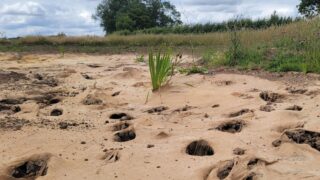
Water Scarcity caused by over-abstraction also has a significant and longer–term effect on river levels and while this is often an issue, the extreme weather exacerbates the problem in two main ways. Of course, with rivers already running low from drought conditions, any water abstracted has a greater impact on the river level. But also, during the hot weather, our domestic demand for water increases, sometimes by as much as 30% on the hottest days [6], as we fill paddling pools, water our gardens, and take more showers [7]. This comes on top of our already high water use, with the average person in the UK consuming around 140 litres per day, compared to just 105 litres in Denmark [8].
As climate change continues to progress, the Met Office expects our summers to become hotter and drier, meaning these challenges are not going away any time soon.
What problems do low flows present for wildlife, freshwater environments, and us?
Low water levels can create a variety of challenges for our rivers and often exaggerate the impacts of existing problems, including pollution. Although untreated sewage spills should, in theory, be less frequent during drier periods, this unfortunately doesn’t necessarily lead to improved water quality. Treated sewage, which still contains a cocktail of contaminants, continues to be discharged into rivers, and when water levels are low, rivers have a reduced ability to dilute pollutants.
As a result, pollution levels often spike, placing additional stress on the freshwater ecosystems. These spikes, even if for short periods, can be too much for aquatic life to handle.
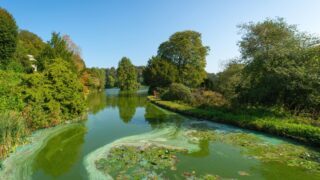
One such pressure is the excessive growth of algae such as blue-green algae and blanket weed. Prolonged heat, concentrated pollutants (especially nitrates and phosphates) and less water in our rivers and lakes, creates the perfect conditions for them to thrive.
Blue-green algal blooms are a particularly visible consequence of these conditions, appearing as large patches of green on the water’s surface, often looking like someone has spilled a can of green paint. These blooms spread rapidly, release toxic compounds, and block sunlight - reducing oxygen levels in the water below. This causes stress to aquatic wildlife, damages the habitats, and can lead to fish deaths. Some species of blue-green algae also pose risks to human health, with exposure potentially causing skin rashes, stomach problems, nausea, eye irritation, and headaches.
Another increasingly common sight in our rivers is blanket weed - a filamentous alga that forms thick mats of bright green, hair-like strands and thrives in nutrient-rich water. It often resembles, and feels like, wet wool, and can quickly take over sections of a river – something that is happening on the River Test, a chalk stream in Hampshire, this summer.
As droughts become more frequent and intense, and water companies continue to extract large volumes of water from our rivers, these types of algal outbreaks are becoming a more familiar challenge for our waterways and the nature that depends on them. 107 algal bloom incidents have already been confirmed in England alone this year [6].
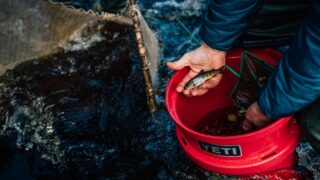
Beyond pollution, the low water levels and high temperatures impact many wildlife species directly, including fish, such as salmon and trout. These species, and many others, are highly sensitive to changes in river conditions and rely on cool, well-oxygenated water to survive.
Warmer waters elevate metabolic rates in salmonids (salmon and trout), which can enhance growth and extend growing seasons. While this sounds like a good thing, it can negatively affect their survival. For example, salmon that smolt after only one year are smaller than those that spend two years in the river, and smolt size is a key determinant in their survival. Increased metabolism also means the fish require more energy simply to maintain basic bodily functions, leaving less energy available for growth, reproduction and avoiding predators.
Their juvenile survival and reproductive success are also closely linked to water temperature, with specific needs for both spawning and egg incubation. Longer, hotter summers can disrupt these natural cycles, such as the annual autumnal cooling of rivers. In 2015, this resulted in a spawning failure in the Rivers Wye and Usk, highlighting the vulnerability of these species.
Even before spawning begins, drought and over-abstraction can create significant obstacles. Artificial barriers, such as dams and weirs, are a widespread issue in our rivers, blocking the movement of fish through the waterways. Overcoming these obstacles requires a huge amount of energy and as water levels fall, the difficulty increases further, with greater distances between the water and the top of the barriers. Species can find themselves trapped in shallow pools, unable to migrate further, and more susceptible to predation.
As climate change progresses, droughts (and floods) are only set to become more frequent and more intense and therefore the challenges facing our rivers are only going to get tougher. But there are solutions and ways that we can all make a difference.
How can we use less water, and help reduce pressure on rivers?
The hot weather undeniably puts a huge amount of pressure on our rivers and highlights the urgent need for action to improve their resilience to the changing climate. Many of the solutions involve long-term changes, such as the widespread adoption of nature-based solutions that create healthier rivers and more resilient catchments. Through restoring rivers and their surrounding landscapes to a more natural state and making space for water by establishing nature-rich riparian buffers and implementing natural flood management measures, we can support wildlife, improve water quality, and reduce the impacts of both flooding and drought. These approaches also deliver wider benefits, from enhancing farm resilience and productivity to creating blue spaces that support our wellbeing and contribute to stronger local economies. Which is why, along with our Riverscape partners (The Woodland Trust, Beaver Trust, and National Trust) our Making Space for Water campaign calls for the UK Government to support farmers and landowners with funding to create and maintain a network of nature-rich river corridors.
Water companies must also play their part by investing in the infrastructure needed to protect our rivers. Fixing leaky pipes and misconnections is essential as, according to the latest Ofwat data, a staggering 2.87 billion litres of water is lost every day through leaks, that’s a fifth of all the water pumped into the network. Reducing this waste would significantly lessen the need to abstract water from rivers. We also need to see sewage treatment works upgraded to ensure that wastewater is properly treated and untreated sewage spills are prevented.
Other water-intensive sectors also have an important part to play. Farmers, for example, can help reduce pressure on rivers by adopting more sustainable, nature-friendly practices that improve soil health, water retention, and climate resilience. Government can support these efforts by delivering the actions in our Making Space for Water campaign and making it easier for farmers to install on-farm reservoirs, enabling them to store winter rainfall for use during drier periods and reduce reliance on water company supplies.
However, there are also actions that each of us can take at home that, when multiplied across millions of households, can make a significant difference, especially during times of drought.
First, a quick disclaimer, it is absolutely important that we all drink plenty of water, keep ourselves cool and clean, and look after ourselves and each other during these periods of extreme heat. But beyond that, there are some simple water-saving actions you can take to help our rivers:
- Follow any local hosepipe bans or restrictions.
- Turn off the tap when brushing your teeth, shaving, or washing up. A simple action that can save up to 9 litres of water every minute.
- Take shorter showers and choose showers over baths.
- Only boil what you need, whether it’s a kettle or saucepan – also saves energy.
- Reuse your “grey water” –Leftover water from cooking, waiting for the shower to warm up, or rinsing veg, can be used to water your plants.
- Use a watering can rather than the hose, and water gardens in the early morning or evening to minimise evaporation.
- Install a water butt or barrel to collect rainwater for the garden or washing your car.
- Sprinklers can use up to 1000 litres an hour, so leave your lawn to go brown! It will bounce back, or you could choose to include more drought tolerant species such as clover.
Want some more creative ways to save water? Read our blog from last year for tips on reducing your water footprint in your home, around the garden, and even in the digital world.
References
[1] https://www.metoffice.gov.uk/research/climate/maps-and-data/about/state-of-climate
[2] Drought declared in half of England - GOV.UK
[3] 23 July 2026 | Beta | SEPA | Scottish Environment Protection Agency
[4] Natural Resources Wales / Dry weather blog: 2026
[5] Climate Statement for June 2026 - Met Éireann - The Irish Meteorological Service
[6] National Drought Group steps up response after third heatwave - GOV.UK
[7] WaterVoice-Extreme-heat-spotlight-report-July-2026.pdf
[8] Average Water Usage in the UK — How Does Your Home Compare? | utilitieskit