World’s Toughest Row: Jake’s final Atlantic voyage preparations
What does it take to get ready for the World’s Toughest Row? Jake Still opens up his food stores and tells us about his final preparations before heading to the start line of his upcoming 3,000-mile solo row across the Atlantic, to raise funds for river restoration work.
05/12/25
On the 12th of December, data scientist and rower Jake Still will undertake the World's Toughest Row by rowing solo across the Atlantic while raising funds for The Rivers Trust and Aire Rivers Trust to support the rivers he loves back home. This is the fourth in his series of guest blogs, where he shares his journey from training to crossing the Atlantic. Catch up on Jake's first, second, and third blogs to learn more about the challenge.
From August to September, I returned to Hartlepool to complete Phase 2 of my Atlantic training: logging another 100 hours at sea. This time, the focus wasn’t just on spending time in the boat, but on practising the drills and skills that will keep me safe and moving forward in the Atlantic’s unpredictable conditions.
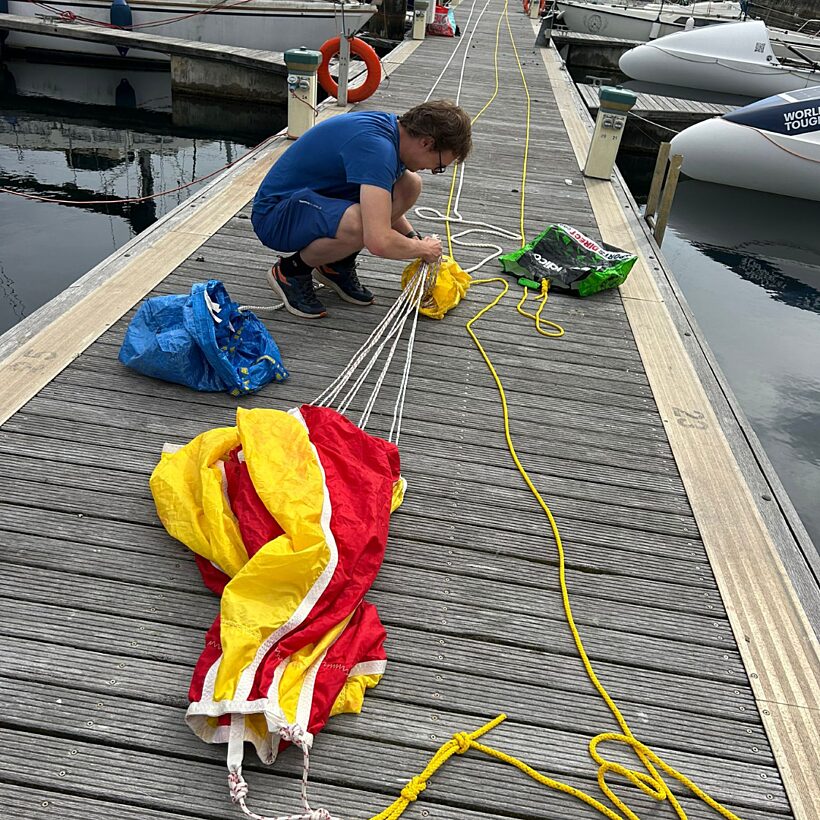
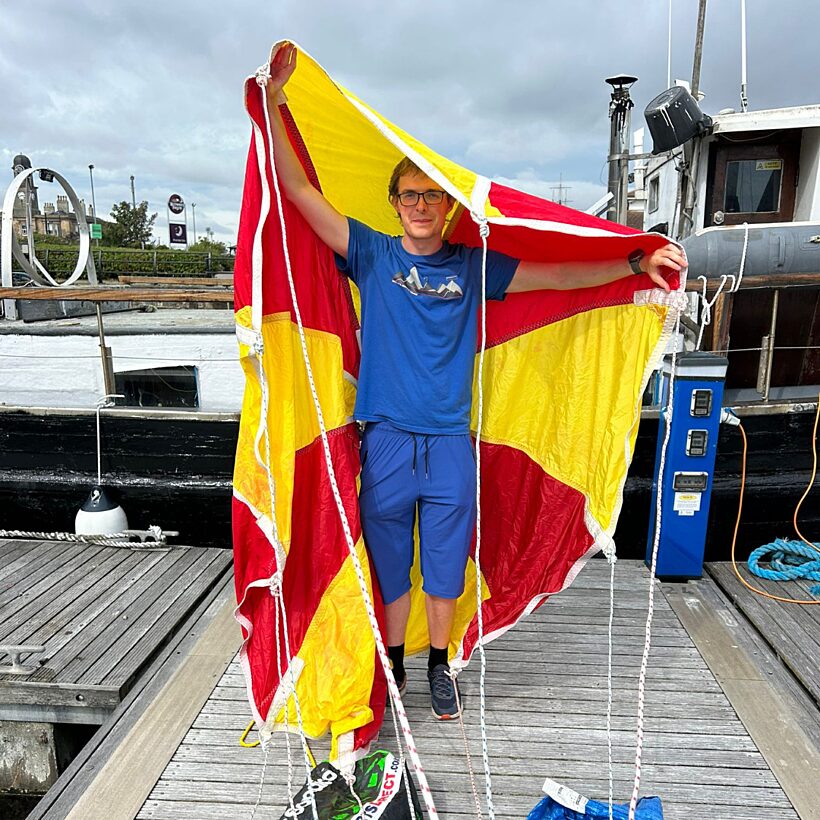
The para-anchor
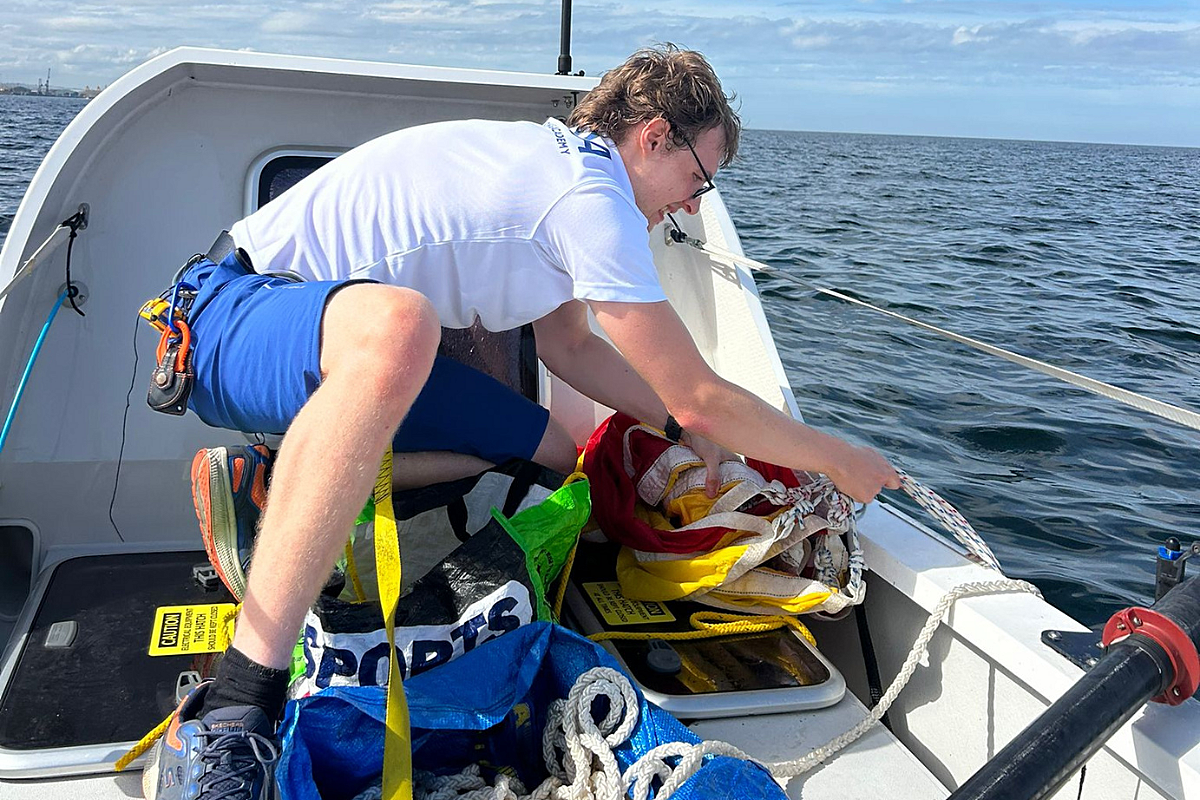
One of the most vital pieces of kit I’ll take with me is the para-anchor, which is essentially an underwater parachute designed to hold the boat in place. With the Atlantic averaging over 3,000m in depth, there’s nothing to tether to, so the para-anchor creates drag in the water, preventing me from drifting too far. It’s deployed in heavy storms or in smaller headwinds when progress becomes impossible. Instead of burning energy fighting the conditions, I can set the para-anchor, rest, and wait for the winds to shift in my favour.
At Hartlepool, I practised deploying it repeatedly until I could do it quickly and smoothly. Near the coast, it’s a little more complicated – other vessels, buoys, and the 100m lines pose entanglement risks. To make things safer, I usually let out only half the rope during coastal trials. Out on the Atlantic, though, I’ll be relying on the full system.
Rudder replacement drills
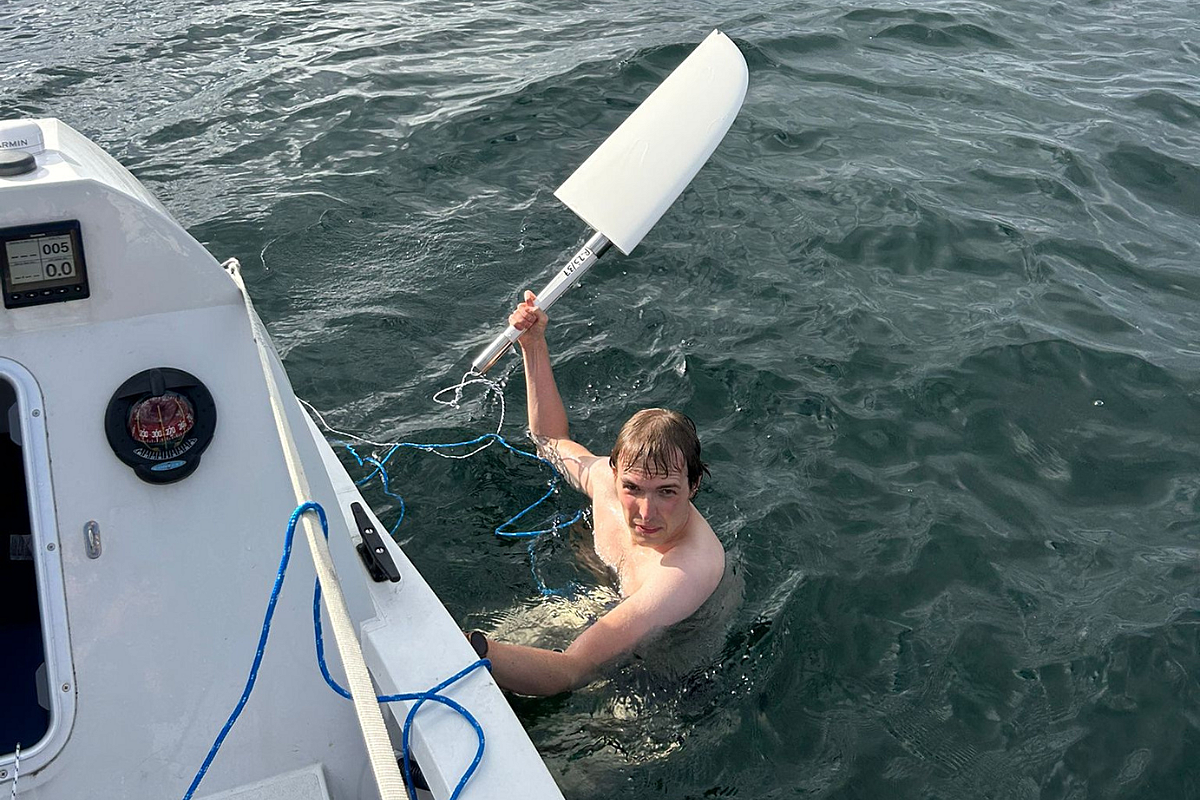
Another critical drill I have been practising is replacing the rudder. To do this on Rannoch R25 involves having to get in the water. Doing this out of Hartlepool in the North Sea, I can tell you was chilly! Think: 14 °C sea temperature and salty up my nose when I backflipped in for style.
As a solo athlete on the boat, the rudder takes a lot of effort and energy to replace. It involves using a lanyard to fasten the end of a rudder to the boat, unscrewing nuts, swimming back to the stern of the boat, taking rudder out, swimming back out, replacing the broken rudder with a new one, climbing out of the water, and screwing it back in the boat. It’s a physical, awkward job even in training. In the Atlantic, conditions could be far rougher – yet it’s something I need to be prepared to face. A broken rudder means steering with oars alone, which is exhausting given the boat’s weight.
Fuel for 3,000 miles
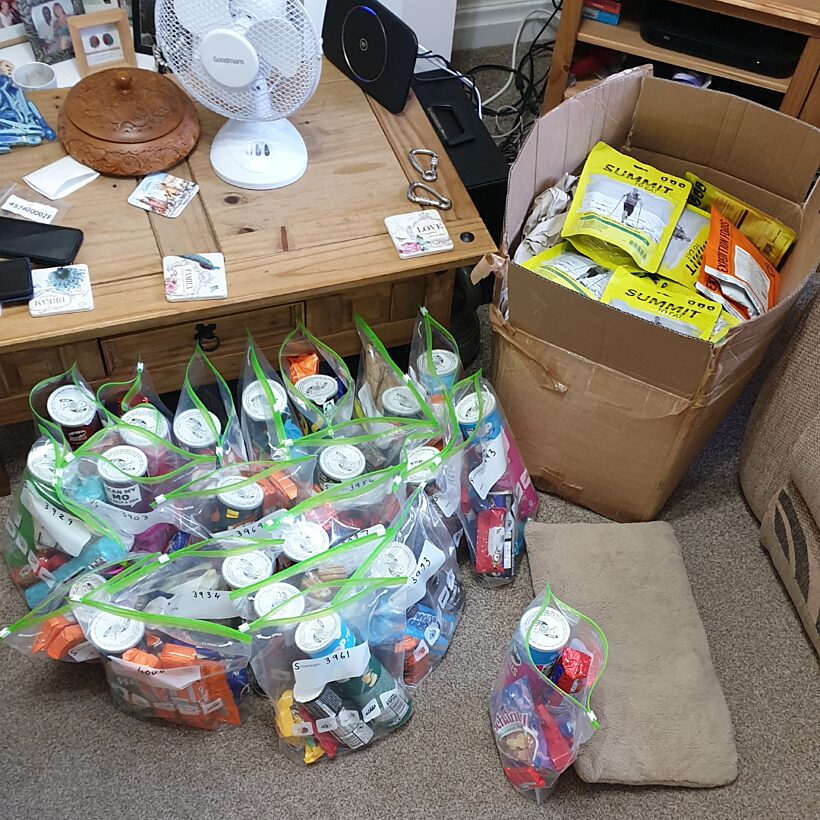
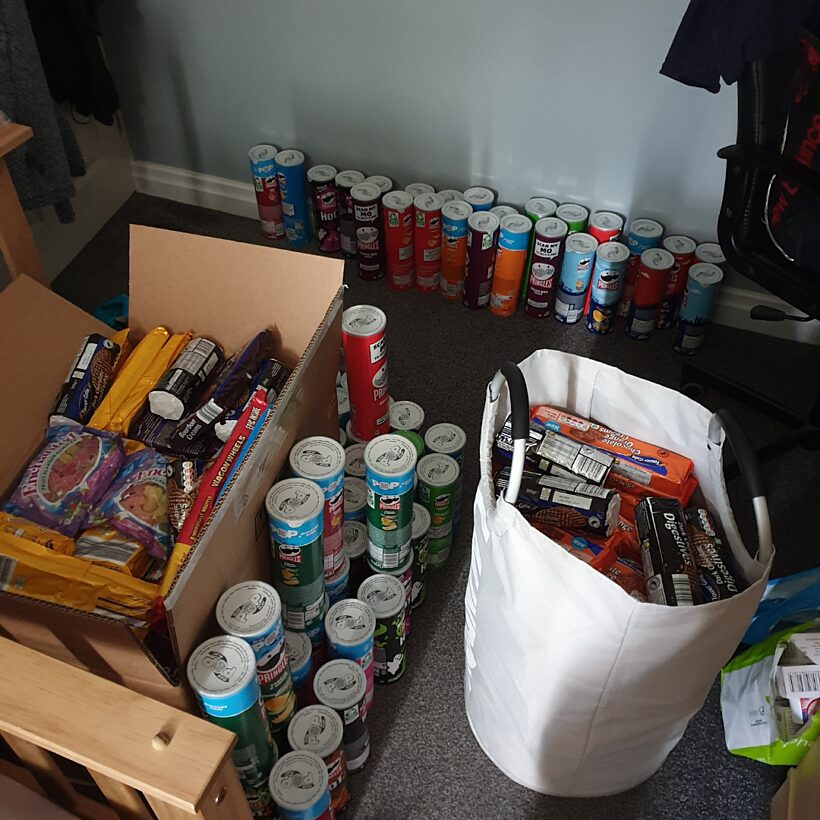
Once training wrapped up in September, my focus shifted to another crucial preparation: food. Race rules require solo rowers to carry enough for 85 days – the upper limit of typical crossing times. At a minimum, I must take 60 kcal per kilogram of bodyweight each day. For me, that means at least around 4700 calories daily.
The foundation of my diet will be freeze-dried meals, which are lightweight, calorie-dense, and easy to prepare by adding boiling water, however at least 20% of meals must also be “wet” (ready-to-eat without rehydration). The rest of the calories I need will come from snack packs – essential morale boosters when I’m tired, seasick, or in no mood to cook. For myself, I have planned for a tub of pringles, 1-2 full packs of biscuits, 1 pack of sweets and various little chocolate bars for the remainder of each day. Additional items I am bringing includes nutritional flapjacks (2 for each day!) and 10kg of meal replacement powder so I can quickly consume calories and get additional micronutrients. I hope that this will also mix things up a little and provide a variety of different types of food.
It might not be gourmet dining, but at sea, the priority is fuel, comfort, and food that I’ll actually want to eat when the going gets tough!
Final thoughts before setting off
It is hard to put into words just how I am feeling about the start of race. Right now, in the last week before flying off, I feel pretty calm and relaxed. A reflection of all training hours I have done on the North Sea. I am as ready as I can be for what lies out ahead. However, when I step off the ferry onto La Gomera, from where the race begins, it will begin to feel very real, very fast as I see all the boats lined up and flags flapping about in the wind. La Gomera is a special place, and I am looking forward to meeting everyone, and excited to share this experience with so many teams and other solo athletes who are also taking part in the race.
I can imagine my heart racing the eve before the race starts as I absorb the gravity of what I am about to do. It has been a long time, since I signed up for the race, and I can't wait to experience everything that Atlantic can chuck at me. I hope to encounter large whales for the first time in my life, surf down the waves and see the starry sky.
Since writing this blog, Jake has travelled out to the start line in La Gomera, you can follow all his pre-race checks and preparations on his Instagram account - @jakedarcy.still
You can support Jake's adventure and contribute to his fundraiser for The Rivers Trust and Aire Rivers Trust, here.
Find out more about Jake and his progress on his website and stay tuned for future updates on our blog.