Mark Lloyd: Running with salmon — couch to 75k
Mark Lloyd, The Rivers Trust CEO, shares his reflections on completing the 43-mile Salmon Run ultramarathon alongside his brother, and Team GB Olympic Rower, Graeme Thomas, to raise money and awareness for Atlantic salmon and our rivers.
26/09/25
Every couple of years, I like to take on a challenge to raise funds for The Rivers Trust, to promote the work of the Rivers Trust movement and highlight the many threats facing our rivers. Earlier this year, I heard about the Tidelines Salmon Run, which is a 43-mile ultra marathon from sea to near the source of the River Exe in Devon to celebrate the Atlantic salmon and their perilous journey from the Arctic Ocean back to the same river in which they had hatched out of a tiny egg four or five years earlier.
I had envisaged walking the route over 2 days but realised that this wouldn’t attract much sponsorship or attention. Despite never having run further than 10 miles, and that being when I was about 16, I agreed to sign up for the ultra-marathon, driven by a mix of professional duty, over-enthusiasm and not really thinking through what would be involved. After some long hikes in Norway over the summer holidays, I started training in earnest in late August, initially with 5 mile runs, which then extended to a peak of 24 miles two weeks before the event, after which I did shorter runs to avoid any injury.
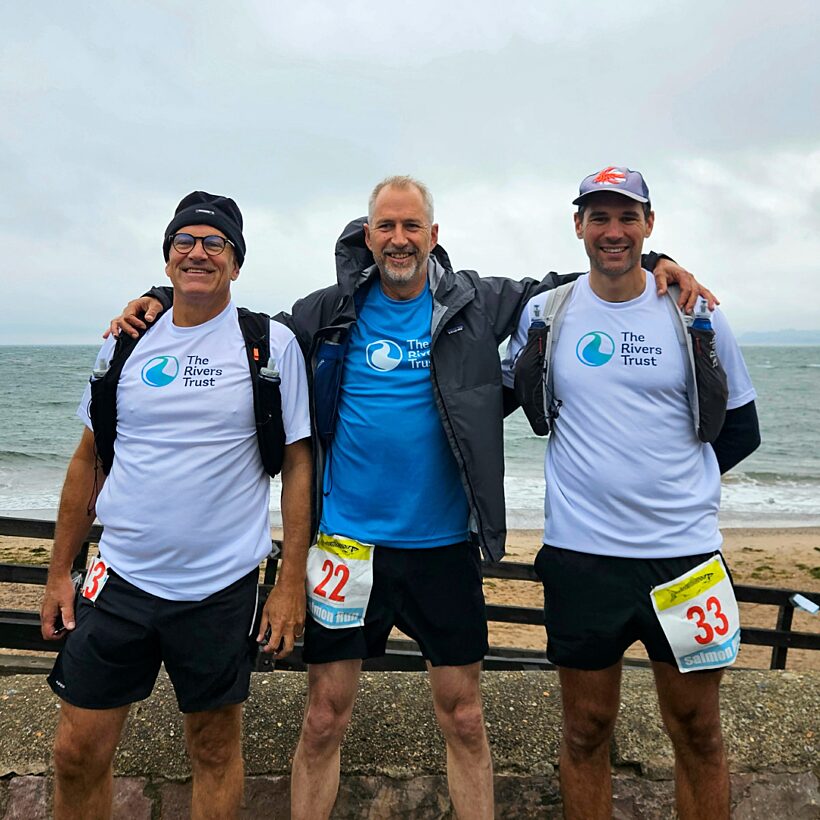
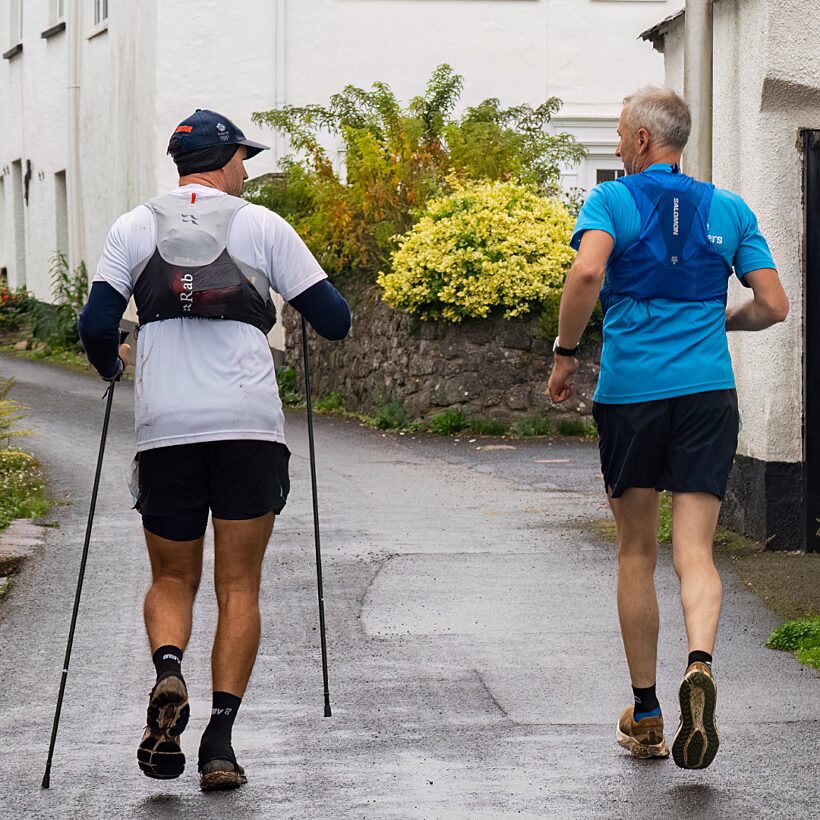
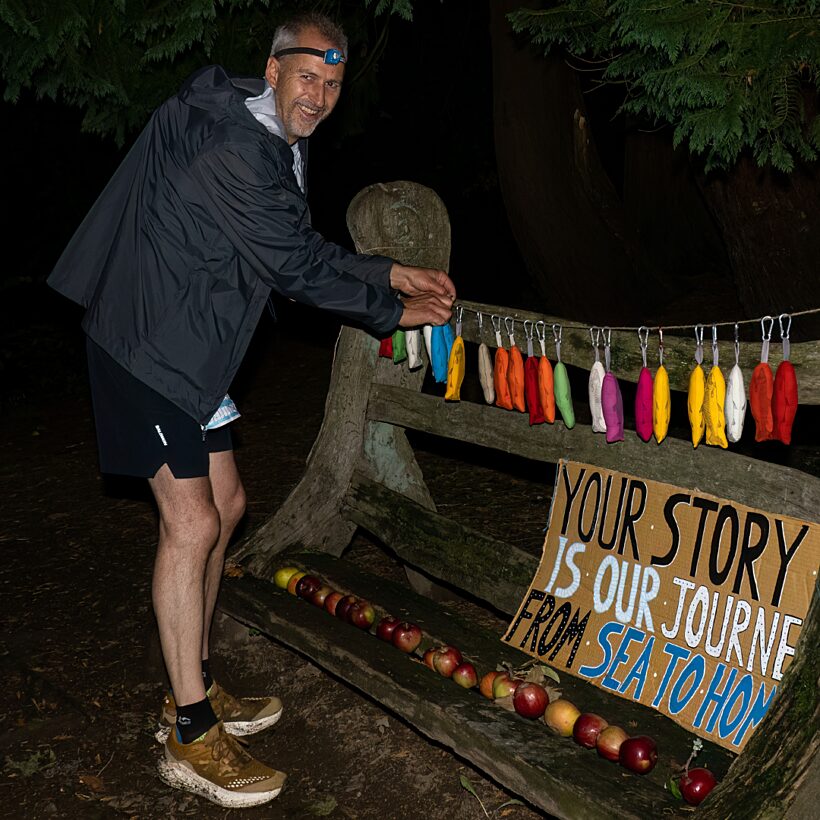
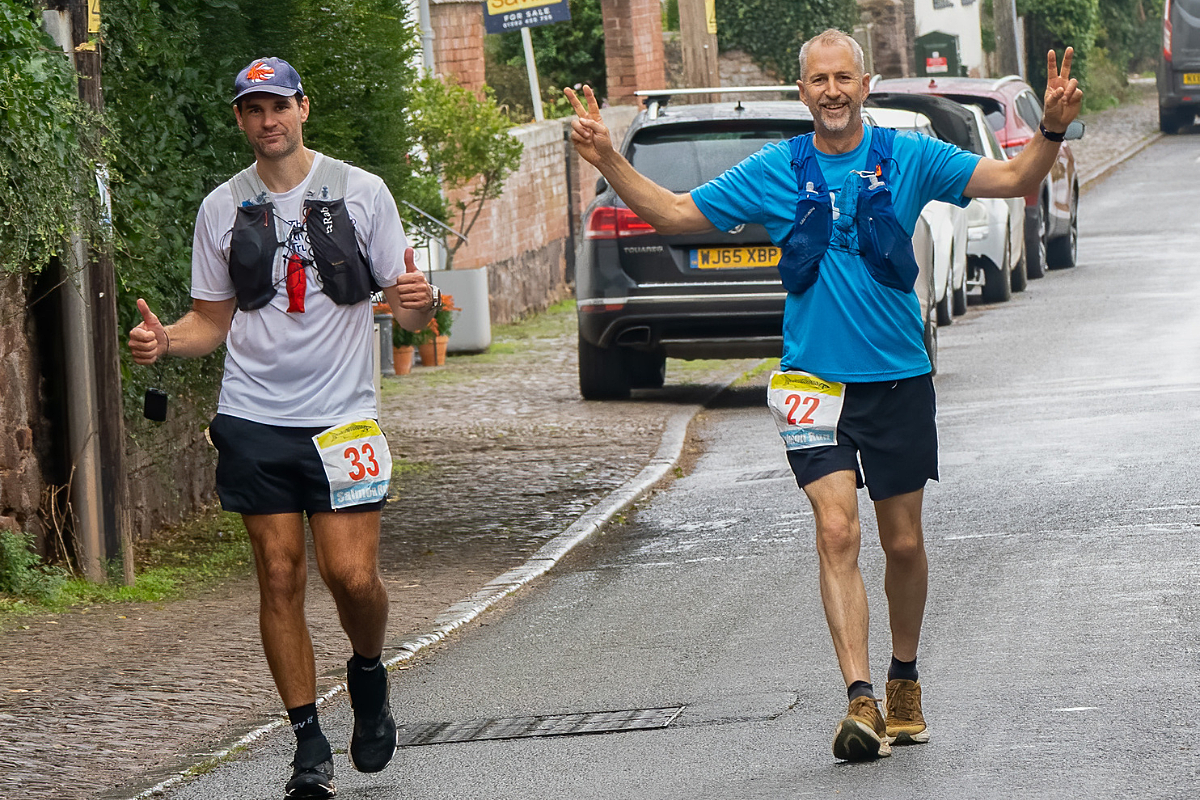
So, it was with a great deal of trepidation that I found myself shivering on a windswept beach at 8am on the 20th of September with a 43-mile route ahead, uphill. My elder brother Richard, a veteran marathon and Iron Man participant, had decided to join me, along with Graeme Thomas, an Olympic rower and a great supporter of The Rivers Trust, who is 20 years younger than me. 35 other participants with steel quadriceps sprang about on the sand with daunting vigour. A man in fishnet tights dressed as a salmon read us a wonderful poem with great hutzpah and then blew into a conch. Off we went, at a cautious trot, with the keenest runners disappearing into the distance. We never saw them again. Richard, Graeme and I plodded along the promenades and concrete flood defences of the lower Exe at the back of the shoal, enduring the sections along main roads with impatient drivers before we got into some wonderful countryside and our feet could get a rest from the tarmac.
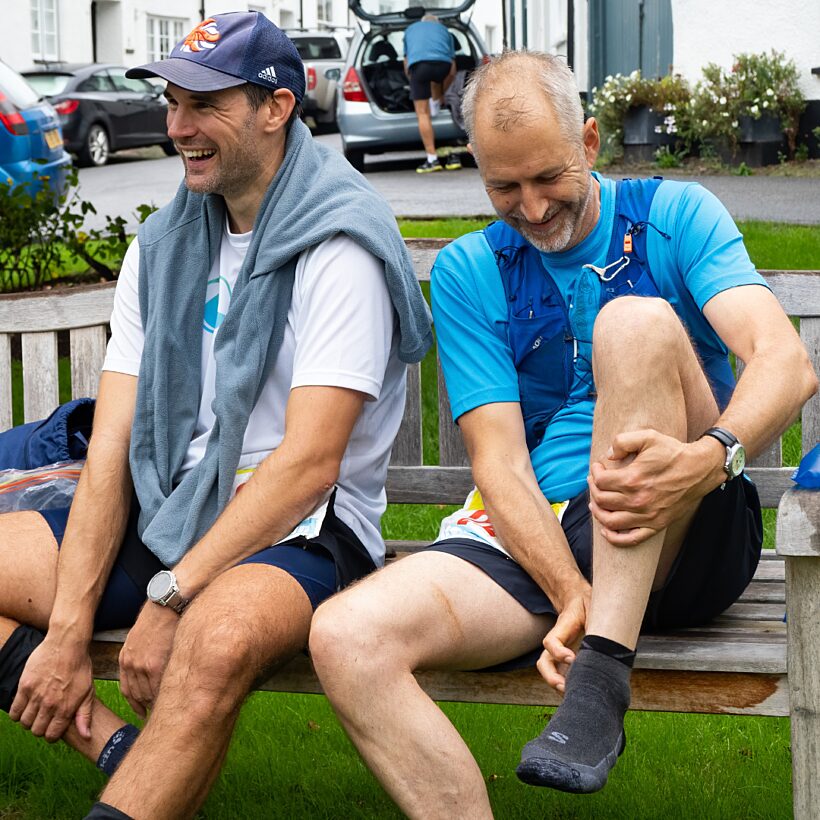
About 20 miles in, the pain started. Feet, knees and hips took it in turns to shout ‘STOP’ via nerve impulses to the brain. At one point, continuing for another 25 miles seemed completely unthinkable, but we egged each other on and the cheers of The Rivers Trust comms team at the rest stops every 10 miles or so gave us a boost. We spent much of the remaining time calculating whether we would make it to the finishing line before 8pm, which was the cut-off for receiving a medal and ordering food in the pub in Dulverton.
Our run slowed to a walk as we hit the hill climbs, and we were battered with heavy rain and wind for a while. We did some awkward, painful jogs on the downhill sections and then in the last 5 miles our pace quickened, spurred on by the thought of Exmoor Ale and the knowledge that we wouldn’t have to run any further. We got to the finishing line a few minutes before 8pm wearing head torches, received our medals with glee from the patient organisers and headed for the warm pub.
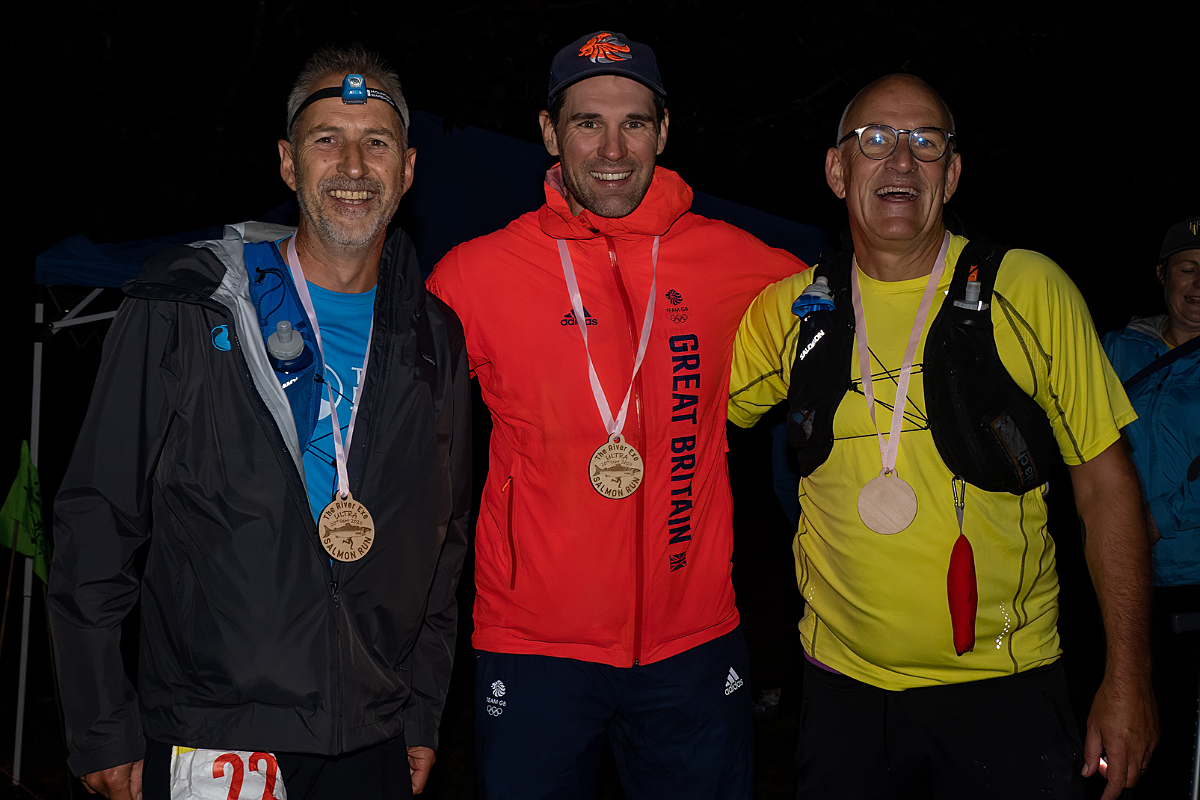
As Graeme Thomas brilliantly observed, we actually had it easy compared to the salmon. We didn’t have to leap up concrete weirs, we weren’t being poisoned by chemicals, sewage and slurry and our oxygen supply wasn’t restricted by high water temperatures and nutrient pollution. The fact that we have any salmon left in our rivers, despite all the harm humans cause them, is testament to their immense resilience.
The Westcountry Rivers Trust is working hard to restore the Exe to save the salmon, planting trees to cool the water, working with farmers to reduce pollution, monitoring water quality, removing weirs and installing fish passes on those that can’t be demolished (read more about this work here). On top of their fantastic work, Dan Osmond, Senior Fisheries Scientist at the Westcountry Rivers Trust, also completed the Salmon Run ultramarathon and you can support his impressive efforts here.
The Rivers Trust is proud to be a part of the Missing Salmon Alliance, which comprises several other river and fisheries charities, to drive evidence-based policy change and to scale-up river restoration and catchment management on every UK salmon river. This wonderful fish, which has swum up the Exe and other rivers on these islands for tens of millions of years, is in danger of becoming extinct in the space of a few hundred years of human industrialisation unless we take concerted action urgently. It is a grave responsibility and a huge challenge, but we must go the extra mile to ensure that we halt and reverse their decline.
I'm 88% of the way to my fundraising target, please help me get to the £10,000 finishing line, by donating to my JustGiving Page, to fund our work advocating for river restoration to save our salmon.
Support my Salmon Run
I'm 88% of the way to my fundraising target, please help me get to the £10,000 finishing line to fund our work advocating for river restoration to save our salmon.