The Rivers Trust at Wild Summit 2026 – revealing the extent of chemical pollution in the environment
Communications Assistant, Jack Hatcher joined colleagues from The Rivers Trust at this year’s Wild Summit to take part in the Chemicals in the Wild event
23/09/26
How do you convincingly explain the origins and impacts of something that is both not fully understood and not always visibly apparent? Armed with bottles of river water and some rather cute looking needle-felt animals, The Rivers Trust joined Fidra and CHEM Trust at Wild Summit 2026 to host an interactive event unveiling the extent of chemical pollution in our ecosystems – or at least as far as we know it to be.
There is a good feeling in the air when you are amongst the environmental sector en masse. Hosted by Wildlife Countryside Link, The Wild Summit invites hundreds of like-minded conservationists, campaigners, and ecologists to converge in Bristol for a day of knowledge sharing and collective advocating for our wild spaces.
It is true that nature is in a dire place (the UK itself being one of the most nature-depleted countries in the world) and that message was not sugar coated by Green Party leader Zack Polanski in his opening keynote address. Despite the sombre tone, it’s hard not to feel hope and pride when surrounded by the countless other organisations working to change that narrative. For us, we know the state of our rivers needs to be a vital part of the conversation, and I joined some of my colleagues to help host a chemicals event in partnership with Fidra and CHEM Trust.
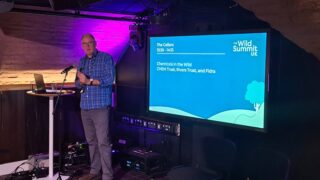
When we talk about pollution in our rivers, much of what immediately springs to mind are the highly visible cases of sewage discharges or fly tipping and whilst chemical pollution can be visible, it can also take a more insidious form – undetectable to the naked eye yet present in virtually every aspect of the ecosystem. Extending far beyond our freshwater environments, chemicals are in the seas, soils, and the air we breathe and many of them, known as PFAS or Forever chemicals, take years to break down.
Already there is plenty to be said about chemicals and this felt a bit daunting to me, but sometimes, when communicating, it is better to show and then tell. With this in mind, our table at the chemicals event featured a few visual aids to help illustrate just how pervasive chemicals are in the environment.
A clear draw for the crowd coming to our table came in the form of a series of needle-felt animals. These five animals, the mayfly, minnow, kingfisher, otter, and seal represented creatures from across the food chain. Initial reaction to these included admiration for the craft and general comments on how surprisingly cute a mayfly could be in felt form. One person lamented how they had never seen a real kingfisher and I was more than happy to offer my birding tips to this individual (look for low, overhanging branches over slow, shallow waters). It felt a bit harsh then to bring the conversation back down to earth when inevitably someone would ask what these cute felt animals had to do with chemicals.
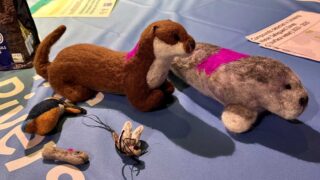
The answer - each have been found to have chemicals in their bodies that can affect their growth, reproduction, and behaviour - and these chemicals build up in the food chain. The presence of endocrine disrupting chemicals in particular has been well documented in fish populations which cause them to exhibit feminisation (or intersex) impacting breeding and population levels. Birds too are affected by chemicals – PFAS from pet flea and tick treatments have been found in nests causing an increase in chick mortality rates – you can learn more about that in our guest blog with Songbird Survival. This bioaccumulation of chemicals has been documented from the bottom of the food chain right to the top – every living thing could be in danger of these side effects.
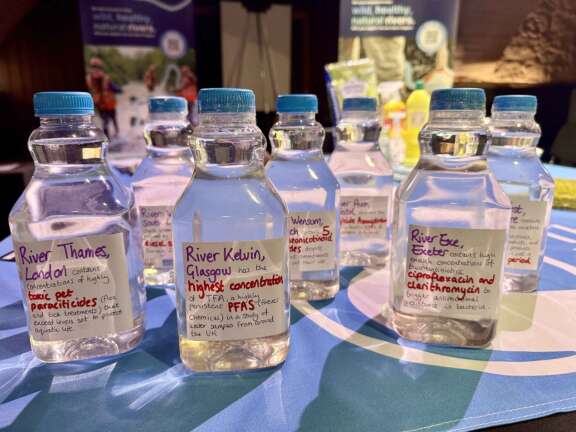
It’s not just the impacts that are widely documented; the sources of chemical pollution are numerous. In illustrating that, we had a selection of water samples from rivers across the UK labelled with the different chemicals found in them. These included the River Kelvin in Glasgow which has the highest concentration of TFA (a highly persistent PFAS), River Test in Hampshire with a cocktail of 116 different chemicals identified in a 12-month period, River Exe on Exmoor with high concentrations of antibiotics that trigger antimicrobial resistance in bacteria, and the River Thames with high levels of pet flea and tick treatments.
In no way is this an exhaustive representation of the extent of chemical pollution in our rivers, in fact the gaps in environmental monitoring mean we don’t know how widespread they may be – a key ask at The Rivers Trust is that we see a more joined up approach to environmental monitoring across the board that integrates alternative sources such as citizen science which prove highly effective in building a bigger picture of river health.
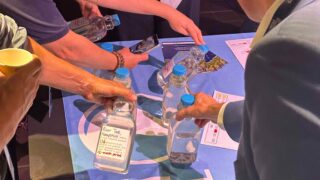
People tend to be quite shocked to learn about all of this, but it was touching to hear how many would try to limit their own ‘chemical footprint’ – opting for more eco-friendly household products, returning unused medicines to pharmacies for safe disposal, or following our advice on pet flea and tick treatments. But the next question on everyone's mind is what can be done to tackle chemical pollution at scale?
This must start with better monitoring. Currently the EU test for significantly more chemicals in the aquatic environment than the UK does, despite the evidence of harm that these chemicals can cause to people and wildlife. These chemicals also need better regulation and control ‘at source’ - they are notoriously difficult and costly to clean out of the environment, so preventing industries for example from using them, unless absolutely necessary, could help reduce how much or how many of them reach rivers.
I wrote earlier of the great challenge nature is facing, and how some of the more pervasive issues that often go unnoticed, such as chemical pollution, can feel particularly intimidating to overcome. But I also want to highlight again that great sense of positivity when surrounded by the buzz of conservationists all working towards a shared goal and how many of the individuals I spoke to, despite the initial dismay, were all eager to do their own part. This is exactly why we need to have these difficult conversations; to lift the lid on the unknown, to advocate for better – sometimes it just takes a bit of creativity to get the conversation started.